Caribbean In the 17th century, Piracy

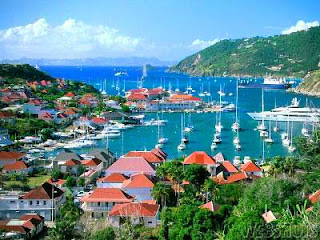 In the 17th century, piracy in the Caribbean Sea was quite common. Roving gangs of bandit sailors took over ships, then attacked ships and towns to seize precious booty ranging from gold and jewels to kegs of whiskey. At one point, there were so many pirates, that an entire town became their home and base of operations. That town was known as Port Royal: The Pirate Capital of the World.
The mainland varies in character by region with each region having its own appearance and feel. New Andalisia (modern Venezeuela) has rocky and sandy beaches, with the sands quickly giving way to verdant vegetation. Within a mile from shore, the vegetation becomes dense jungle, at least in uninhabited regions. The settlers slashed or burned the area around the village for agriculture.
New Granada is mountainous in the south, with the isthmus of Panama being a 50 mile wide mire from Pacific to Atlantic. The jungle vegetation in both New Andalusia and New Granada is insect-infested and Malaria is common.
New Spain ranges from forested mountains in the south to deserts in the north. The central region is mountainous and rocky, with lands being cleared or terraced for farmland.
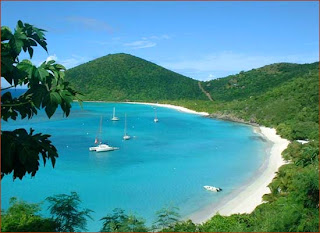
Larger Islands are much like the mainland, with sandy beaches, dense forest or jungle, and a mountainous interior. Some islands have active volcanoes, with a constant plume of smoke rising from their cones.
Small islands are formed from volcanic action or reefs. Small, circular islands formed by reefs are called atolls and have low vegetation on the outer edge and a body of salt water in the center. Small islands formed by reefs and tidal action have little in the way of large vegetation and frequently are not fertile enough for sustaining crops. These islands are hard to spot from a distance unless they are sizeable or in shallow water, such as the Bahamas. Therse small, low islands are referred to as cays.
Small volcanic islands are dominated by the peak (or peaks) of the volcano. These islands have steep slopes and fertile ground.